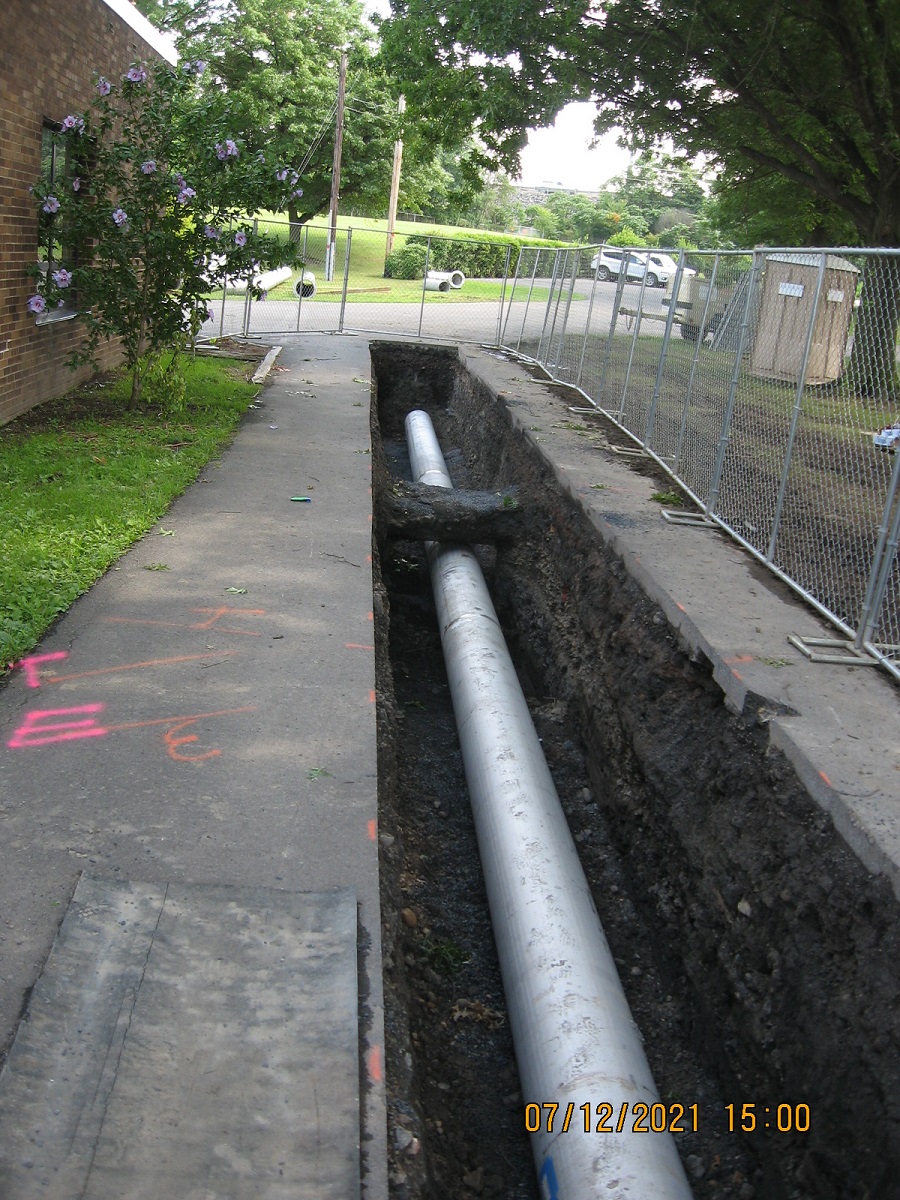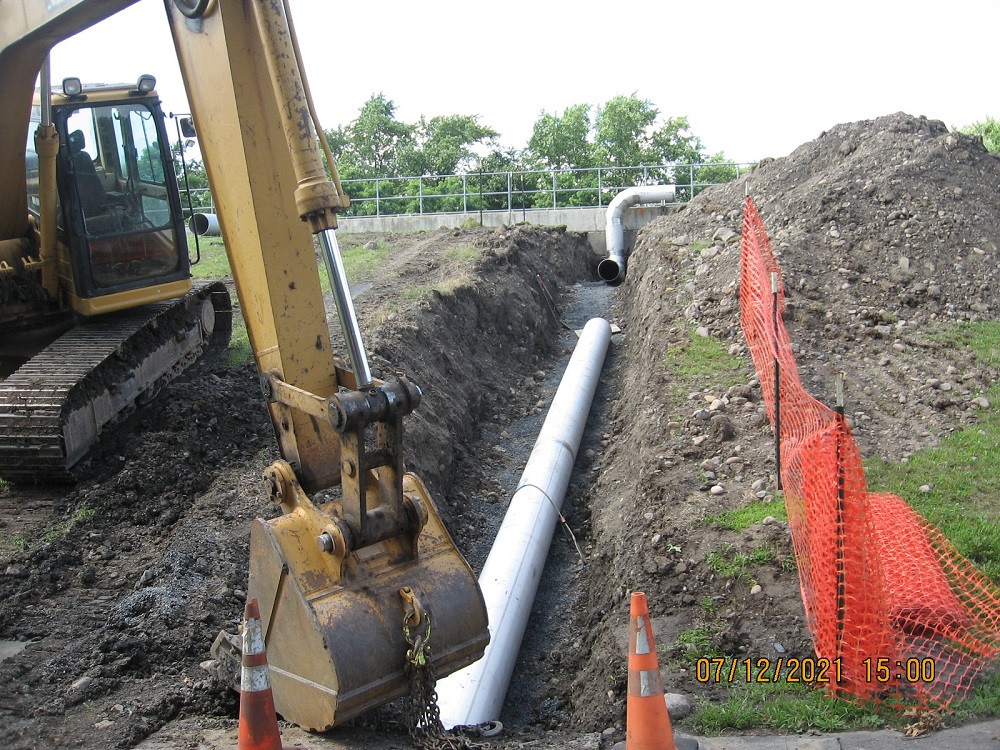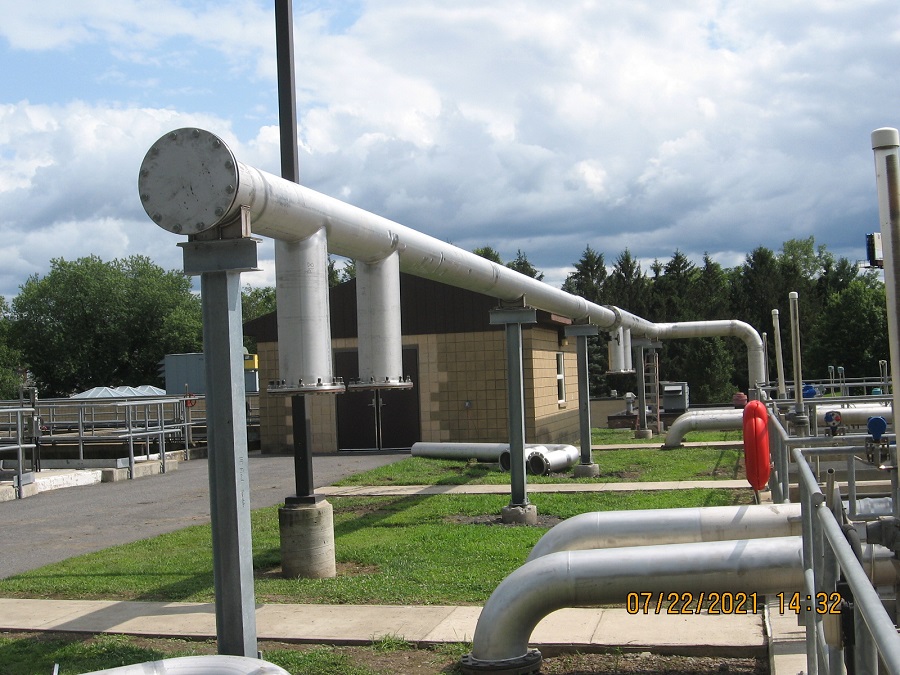
The Throop treatment plant utilizes a biological process to remove organic contaminants from wastewater. During this process, air is pumped into the treatment tanks, providing oxygen to beneficial microorganisms that break down the pollutants. However, the existing underground pipeline that delivered air to the treatment tanks had multiple pipe segments with leaking joints, leading to air loss. This required the air supply system to work harder, resulting in higher energy consumption to maintain adequate oxygen levels for the biological treatment process.
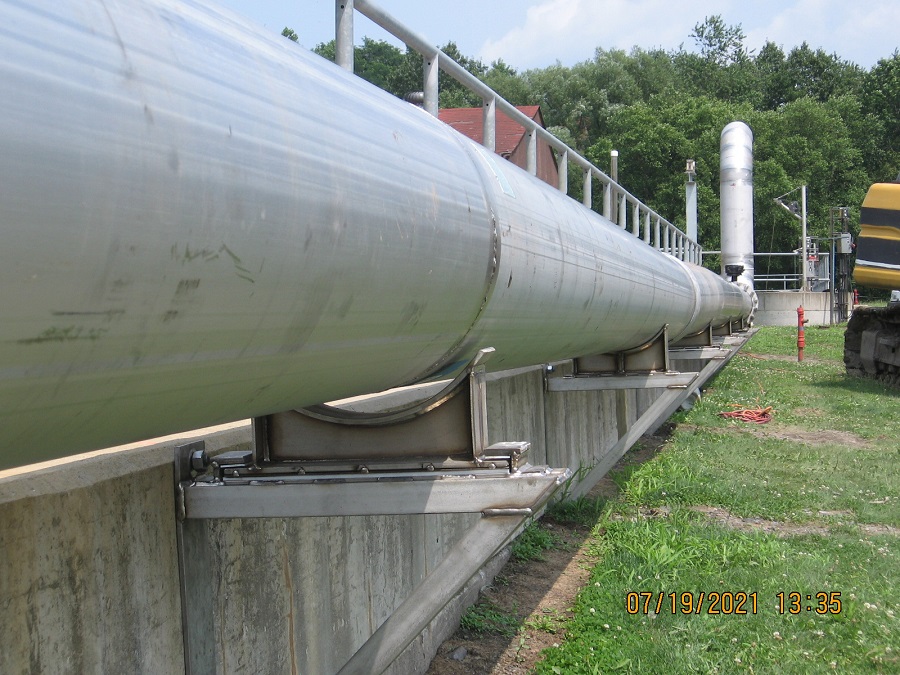
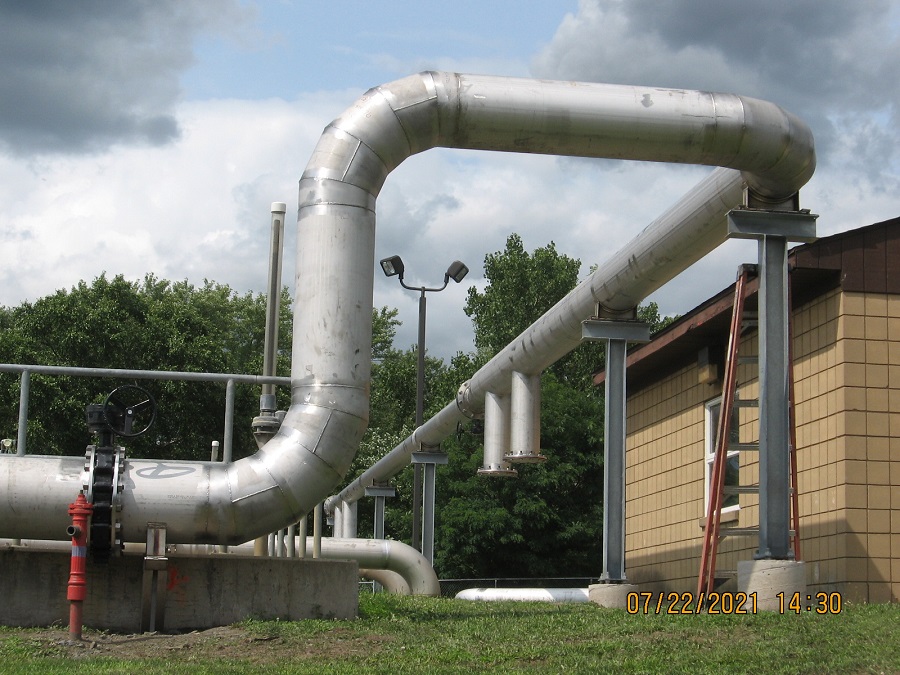
To address this issue, the old ductile iron pipeline was replaced with a new stainless-steel pipeline featuring welded joints. The new design eliminates mechanical joints, reducing the potential for deterioration and improving the efficiency and reliability of the aeration process, with the added benefit of energy savings. Additionally, the stainless-steel material offers enhanced durability and resistance to corrosion. Portions of the pipeline were constructed above ground to lower construction costs and avoid conflicts with the numerous existing underground utilities on the treatment plant site.