Secondary Treatment
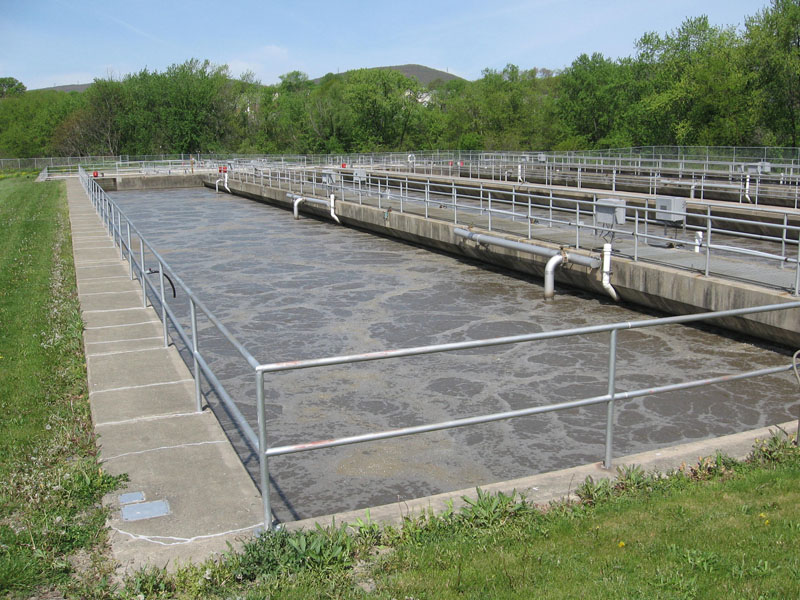
The LRBSA treatment plants utilize the activated sludge process for effective secondary wastewater treatment. In this process, wastewater entering the aeration tank is mixed with activated sludge—a blend of organic material and beneficial microorganisms. Air is bubbled through the aeration tank, supplying oxygen to bacteria and other microorganisms that break down organic matter, effectively purifying the wastewater.
To meet Pennsylvania’s Chesapeake Bay water quality standards, the LRBSA facilities also remove nitrogen and phosphorus from treated water. These nutrients, if not controlled, can cause excessive plant growth, harming aquatic ecosystems.
Nitrogen is removed by alternating oxygen-rich (aerated) zones with oxygen-free (unaerated) zones. This cycle encourages specialized bacteria to eliminate nitrogen in the absence of oxygen. Phosphorus is removed by adding a chemical after the aeration process, which binds with the phosphorus and is then incorporated into the activated sludge.
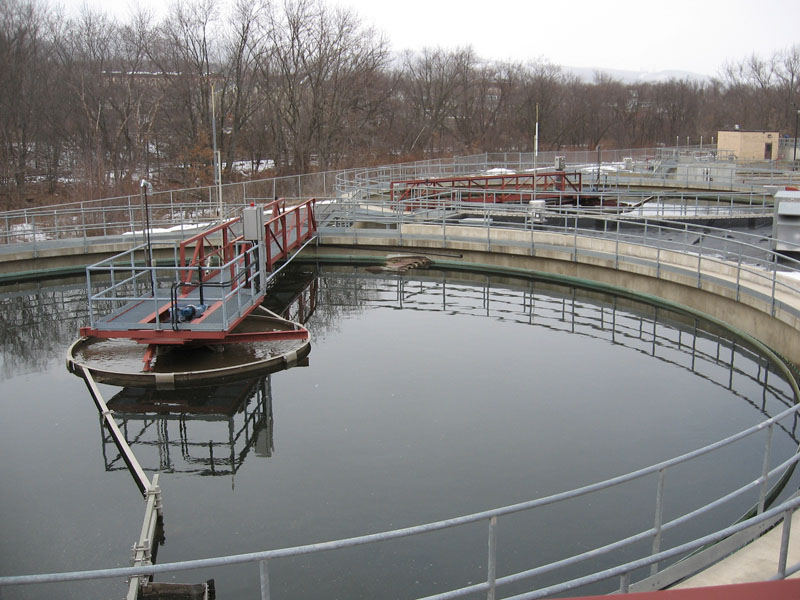
The treatment process continues in secondary clarifiers, where the activated sludge settles to the bottom. Some of this sludge is directed to sludge treatment, while the rest is returned to the aeration tanks to maintain the biological process. The clarified, treated water flows over the surface of the clarifiers, advancing to the next stages of treatment.